

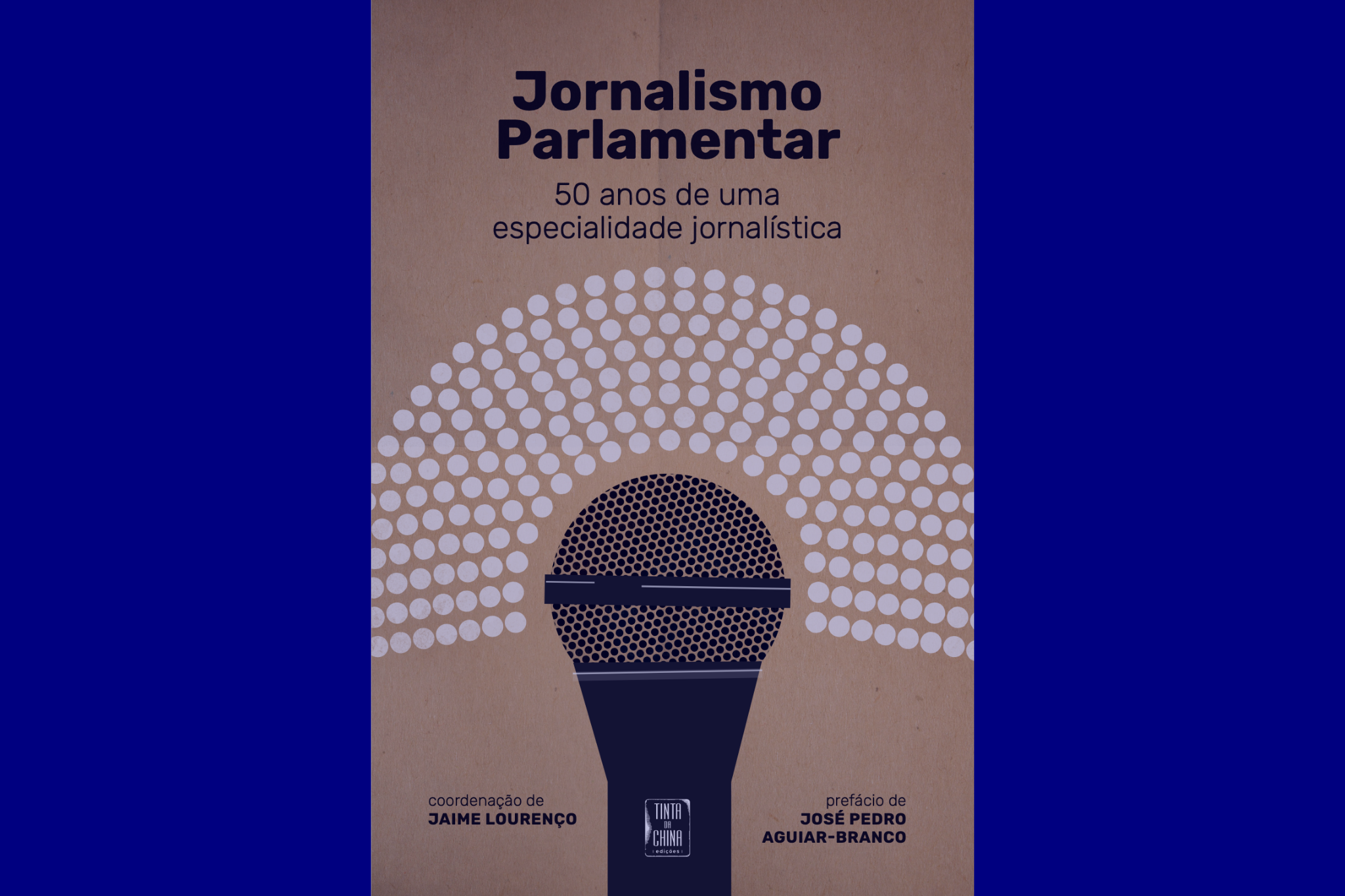
The book Parliamentary Journalism: 50 Years of a Journalistic Specialisation, coordinated by LIACOM researcher Jaime Lourenço and published by Tinta da China, will be presented on 15 July at the Assembly of the Republic.
Published during the commemorations of the 50th anniversary of the 25 April Revolution, this volume seeks to understand how parliamentary journalism—an area of journalism that is distinctive to Portugal’s political and media system—has evolved over the past five decades. The book offers “a critical perspective on the journalistic specialisation that is embedded in, lives through, and is deeply immersed in political and parliamentary activity.”
The volume brings together more than 20 authors in a multidisciplinary team comprising scholars from Media Studies, Communication Sciences, Contemporary History, Social Sciences and Political Science, alongside political journalists from a range of Portuguese news organisations.
The book opens with a chapter by Jaime Lourenço, the editor of the volume, entitled Parliamentary Journalism in Portugal: The Lung of Democracy. In this opening chapter, the author provides a comprehensive overview of parliamentary journalism, examining its defining characteristics, specific features and key reflections based on interviews with former and current parliamentary correspondents from different generations and with diverse professional backgrounds.
The book is divided into three distinct yet complementary sections. The first presents a historical analysis of parliamentary news coverage over the past five decades, mapped across six chapters. It considers changes in media production routines, journalistic practices, and the evolution and transformation of Portuguese politics. Contributors to this section include Pedro Marques Gomes (Escola Superior de Comunicação Social), Álvaro Costa de Matos (Lisbon Municipal Newspaper Library), Paula Espírito Santo (Institute of Social and Political Sciences), Susana Rogeiro Nina (Lusófona University), Susana Barros (Antena 1), Filipe Resende (Portuguese Catholic University), Raquel Trindade (Portuguese Catholic University), and João Morais do Carmo (TVI/CNN Portugal).
The second section is dedicated to studies, essays and reflections focusing on the present and future of the Portuguese Parliament, civic participation, the relationship between citizens and the media, and young people’s engagement with both Parliament and journalism. Contributors include Carla Martins (Portuguese Media Regulatory Authority), Hélder Prior (Autonomous University of Lisbon), José Santana Pereira (Iscte), André Catita (Iscte), Leonor Pires (Iscte), Paula Lopes (Autonomous University of Lisbon), Sofia Ferro-Santos (European University), Gustavo Cardoso (Iscte), Vasco Ribeiro (University of Porto), Tiago Durães (University of Porto), Vinicius Albernaz (University of Beira Interior), and Hugo Ferrinho Lopes (University of Minho).
The third and final section features contributions from former and current Presidents of the Assembly of the Republic: João Mota Amaral in an interview conducted by Joana Reis (Autonomous University of Lisbon), Augusto Santos Silva in a profile written by João Ferreira Oliveira (Autonomous University of Lisbon), and José Pedro Aguiar-Branco in an interview conducted by Sandra Antunes (TVI/CNN Portugal).
The foreword is written by the President of the Assembly of the Republic, José Pedro Aguiar-Branco, who states:
“This book, coordinated by Professor Jaime Lourenço and produced within an academic context, seeks to offer a timely and renewed perspective on the history of parliamentary journalism in Portugal, combining an analysis of the past with the study and reflection on the present and future challenges facing the press. In doing so, it provides Portuguese readers with an important account of the relationship between the media and the corridors of Parliament; the story of the women and men who have chronicled our shared history; and the record of the journalists who, over the past 50 years, have helped ensure the transparency of our democracy.”