

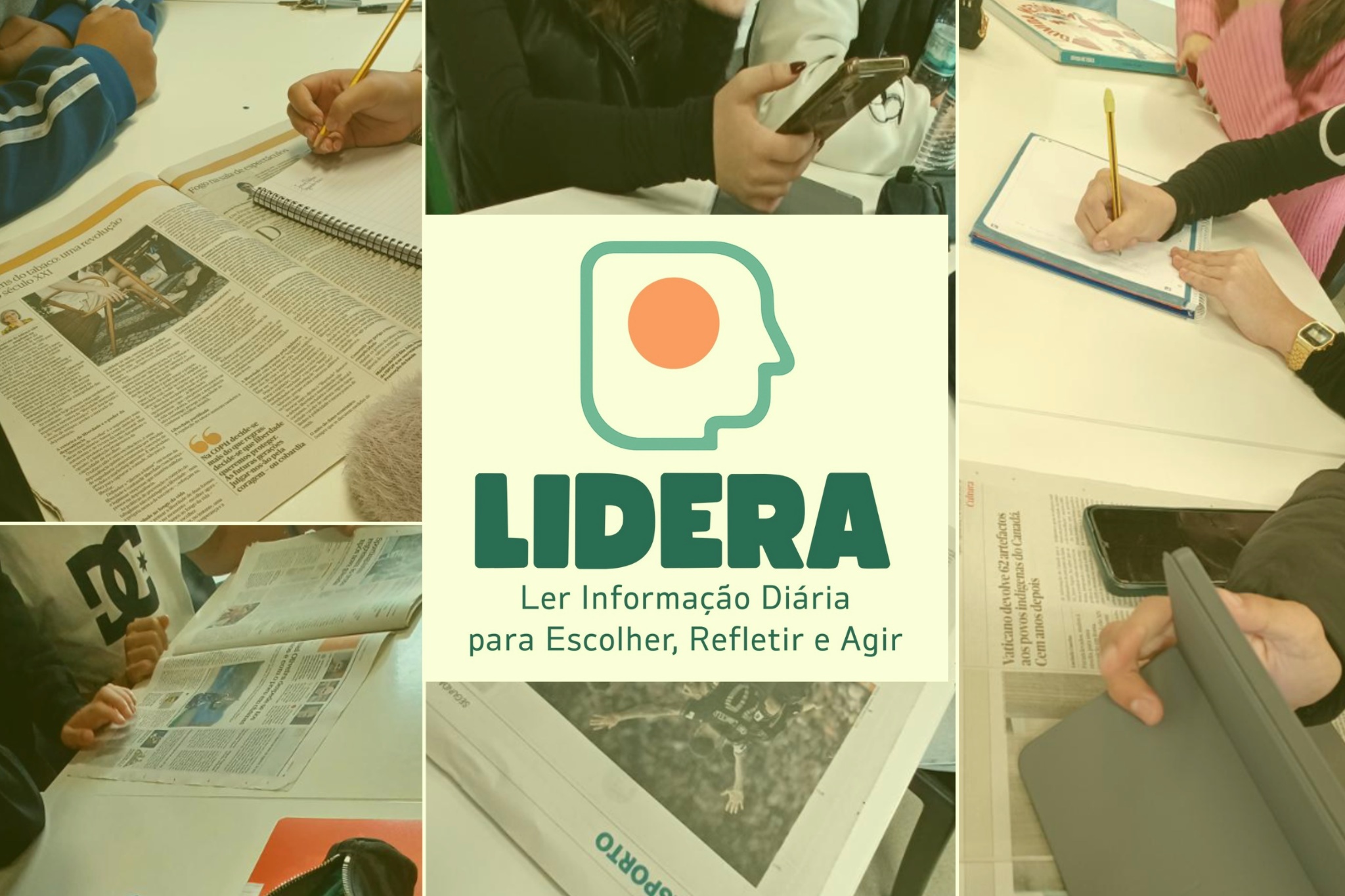
The pilot edition of LIDERA – Reading Daily Information to Choose, Reflect and Act came to an end in May this year, confirming the potential of a cascading training model to strengthen media literacy and critical news reading in Portugal. A new edition, to be held in the next school year, is already being planned.
The initiative was promoted by the UNESCO Chair of Communication, Media and Information Literacy and Citizenship (ESCS-IPL), the Portuguese Regulatory Authority for the Media (ERC – Entidade Reguladora para a Comunicação Social), and the School Libraries Network (Rede de Bibliotecas Escolares). The program ran from October 2025 to May 2026, involving school, higher education, and public libraries across the country – from Chaves to Santiago do Cacém, and from Santa Maria da Feira to Vila Franca de Xira.
Throughout the year, six online training sessions were delivered for teacher librarians and librarians (acting as facilitators), covering topics such as responsibility in journalism, source comparison, artificial intelligence in newsrooms, disinformation, and the role of the media in democracy. These sessions were subsequently replicated through workshops tailored to different audiences and local contexts.
The project involved more than 70 libraries (school, higher education, and public libraries), with an average attendance of 90 facilitators in the training sessions. These, in turn, were replicated in 708 local workshops, reaching nearly 3,600 participants.
The evaluation results reflect a very positive overall outcome. Among participants in the library workshops – most of whom were high school students – 86.6% rated their satisfaction at 3 or above on a 5-point scale, while 85.3% also rated 3 or above to having gained new knowledge through the project. Participants’ feedback highlighted an improved ability to distinguish reliable information from disinformation, stronger critical news analysis skills, greater appreciation of journalistic sources, and increased awareness of the media’s role in democracy.
The facilitators also evaluated the initiative very positively: 100% reported being satisfied or very satisfied, emphasising the quality of the training materials, the relevance of the topics covered, and the reflective learning approach. The main areas identified for improvement included better adapting some activities to end-user audiences, adjusting the duration of the sessions, and improving the management of the online training sessions.
Based on the evaluation findings and the requests received from the community of teacher librarians and librarians, the project partners intend to launch a new edition of LIDERA in the next academic year. The new edition will incorporate the improvements identified and expand participation to new facilitators and libraries. At the same time, the partners aim to maintain the community of practice established during this pilot edition by creating opportunities for continued exchange and collaboration among the facilitators already involved in the project.
The objective is to consolidate an initiative that has demonstrated strong potential to strengthen facilitators’ competences and promote critical reading, dialogue, and reflection, thereby contributing to the development of more critical, informed, and resilient citizens, better prepared to navigate the challenges of today’s information ecosystem.