

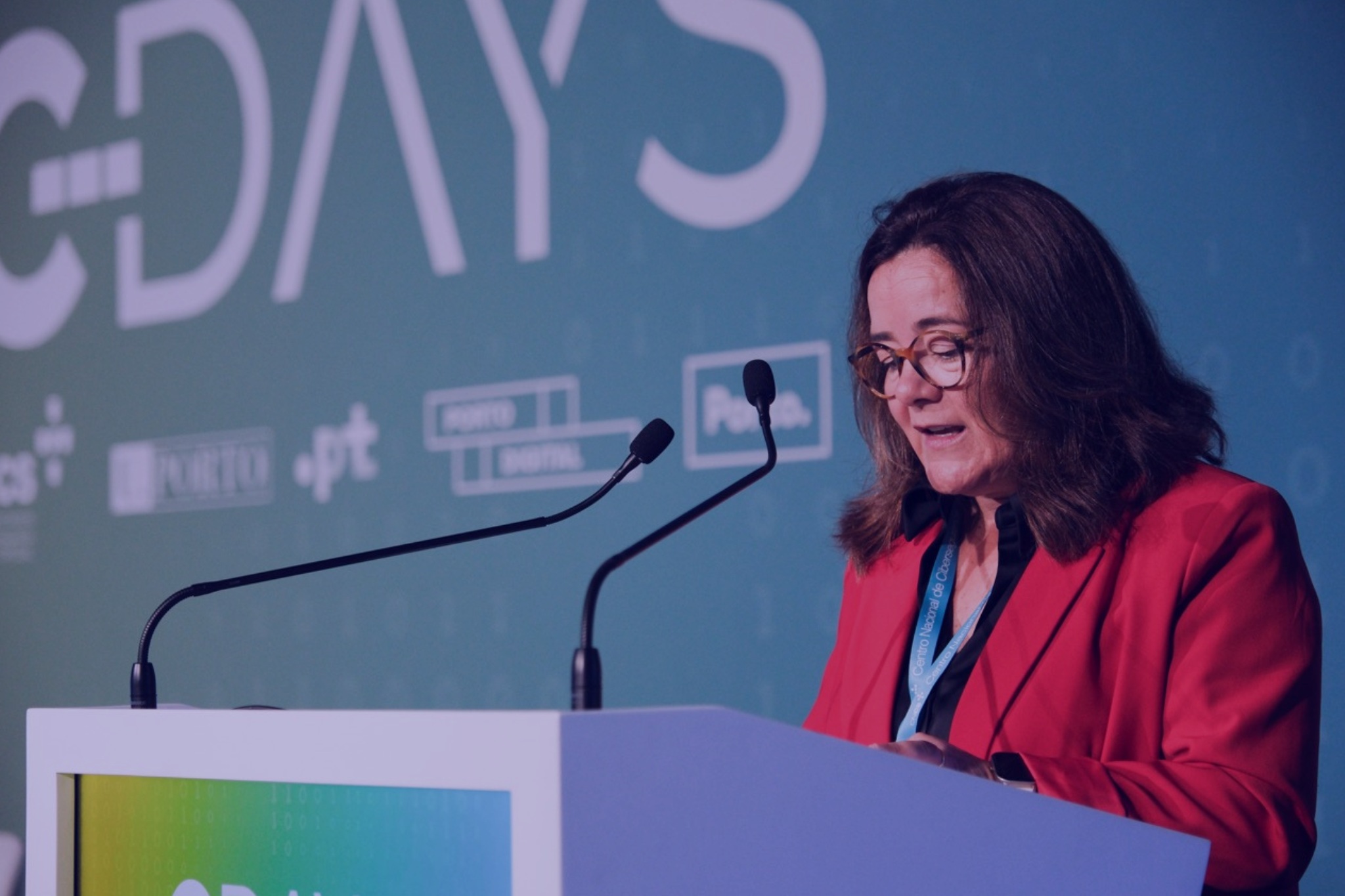
From 16 to 18 June, the National Cybersecurity Centre (CNCS) held the 12th C-Days Conference at the Alfândega do Porto Congress Centre, a Portuguese leading event dedicated to cybersecurity and its implications across different areas of society.
The programme featured keynote addresses, parallel sessions on topics including governance, technology, legislation, and mental health, as well as workshops and a Startup Village, providing a space for Portuguese cybersecurity companies to showcase and exchange innovative solutions.
On 18 June, Fernanda Bonacho, chairholder of the UNESCO Chair of Communication, Media and Information Literacy and Citizenship (LIACOM/ESCS), researcher at LIACOM, and professor at the School of Communication and Media Studies (ESCS), delivered a keynote presentation dedicated to communication as public responsibility.
In her address, Fernanda Bonacho highlighted the role of the media – including digital platforms – and media literacy in fostering a high-quality communication ecosystem.
On the one hand, she emphasized that the media “do not simply provide information; they also help shape society’s understanding of risk.” In this context, Bonacho stressed the responsibility of media organizations to communicate in ways that enable citizens to make informed decisions, without distorting reality or amplifying perceptions of threat, thereby avoiding the contamination of understanding of public issues.
On the other hand, the UNESCO chairholder underscored that media literacy comprises a set of essential competencies for civic and responsible participation in today’s complex digital environment. “Media literacy is one of the few tools that strengthens individual autonomy, builds trust without censorship, and defends democracy without restricting freedom,” she stated.
From Fernanda Bonacho’s perspective, cybersecurity should therefore be understood in broad terms. Beyond the issues most commonly associated with online threats, it also requires considering the responsibility of the media and the active participation of citizens in building trust, prevention, and democratic resilience.
Later that day, the expert also participated in the panel discussion “The Digital World and Mental Health,” alongside Elsa Caetano from the CNCS, Vânia Bastos from the Portuguese Institute for Sport and Youth (IPDJ), and Natália Pestana from the association Probranca and coordinator of the Web4Kids project.
Held annually, the C-Days Conference focused this year on the changing approach to cybersecurity in Portugal following the entry into force of the new Cybersecurity Legal Framework (Decree-Law No. 125/2025 of 4 December) and on how this new legislation will shape the various dimensions of cybersecurity policy and practice.
Photos by Centro Nacional de Cibersegurança